Forced Reset Trigger Explained: How It Works and Why It Matters
What if your rifle’s next shot could be as fast and controllable as your trigger finger’s rebound? A forced reset trigger is a mechanical system that physically pushes the trigger forward after each shot, synchronizing the fire control group with the bolt carrier’s return stroke. This allows you to fire at near full-auto speed by simply maintaining steady rearward pressure on the trigger, while the mechanism “resets” it for you—delivering binary-like speed with semi-auto precision. To use it, load a round, pull the trigger fully, and let the carrier’s momentum drive the trigger back into your finger’s resting position for an instant, repeatable follow-up shot.
What Exactly Is a Forced Reset Trigger and How Does It Differ From Full Auto?
A forced reset trigger (FRT) mechanically pushes the trigger shoe forward after each shot, using recoil energy from the bolt carrier, which resets the sear without you releasing your finger. This creates a fast, rhythmic firing cycle, but crucially, each pull still releases a single round—the trigger must physically reset before the next shot. Full auto, by contrast, uses a sear that continuously fires while the trigger is held, with no reset required and a hammer that drops repeatedly until the magazine empties. The core difference: FRT is a semi-automatic action with an assisted reset, meaning you initiate each shot, while full auto is self-sustaining. Q: Does an FRT feel like full auto? A: It mimics the high-speed cadence, but you’re still pulling the trigger for every round—full auto needs just one pull. Practically, an FRT keeps the legal semi-auto function while delivering a rapid bump-like pulse, but your finger must stay in constant motion to maintain the cycle.
Understanding the Mechanical Principle Behind the Reset
The forced reset trigger mechanism relies on a cam or lever that physically pushes the trigger forward after each shot, mimicking the sear reset without requiring the shooter to release pressure. Unlike a standard trigger, where a spring alone returns the trigger, the forced reset uses bolt carrier movement to drive a linkage that actively forces the trigger shoe forward. This action trips the disconnecter and re-engages the sear precisely as the bolt closes. The sequence is: 1) hammer falls, 2) bolt carrier recoils and rotates the cam, 3) the cam pushes the trigger forward, 4) trigger re-arms the sear, 5) bolt closes and allows the next pull. The shooter’s finger must still initiate each shot, but the reset is instantaneous and mechanical, not dependent on muscle relaxation.
Key Differences Between a Bump Stock, Binary Trigger, and a True FRT
A bump stock uses the firearm’s recoil energy to “bump” the trigger into your stationary finger, harnessing momentum for rapid fire—it adds no mechanical parts and stops if your grip shifts. A binary trigger fires once on the pull and once on the release, giving two shots per trigger cycle, but it requires a deliberate reset of the trigger finger and does not simulate full-auto cadence. A true forced reset trigger (FRT) mechanically pushes the trigger forward after each shot, forcing the sear to reset without relying on recoil or finger timing, yielding a consistent, full-auto-like rate of fire. The critical mechanical distinction is the reset mechanism: bump stocks exploit external energy, binary triggers depend on shooter input, while an FRT uses internal cam-driven force to reset the trigger independently. Sequence: 1) bump stock—no trigger modification, 2) binary—electronic or mechanical drop-in for two shots per pull, 3) FRT—internal forced reset for continuous cyclic fire.
Why the Trigger Reset Is the Core of the Firing Cycle
The firing cycle’s speed is dictated not by the hammer’s fall, but by how quickly the trigger returns to its forward ready position. In a forced reset trigger, this return is mechanically accelerated, making the **trigger reset the core of the firing cycle** because it eliminates the shooter’s need to release the trigger manually. While full auto uses a sear to release the hammer continuously, an FRT forces the trigger forward instantly after each shot, allowing the shooter to pull again immediately. Without this aggressive reset, the cycle stalls, turning the mechanism into a slow, standard semi-auto pull. The reset is not a follow-up action—it is the engine that drives the next ignition. Trigger reset speed dictates maximum practical fire rate.
Q: Why is reset more critical than the pull itself?
A: The pull only starts one shot, but the reset determines when the next shot can begin. A delayed reset creates a hard mechanical pause, effectively capping your firing speed far below the weapon’s actual cyclic capability.
How Does a Forced Reset Trigger Work in Practice?

A shooter using a forced reset trigger starts with the hammer cocked and the safety off. In practice, you pull the trigger straight back; the sear releases the hammer, and the bolt carrier group recoils rearward. As the bolt returns forward, its trip lug strikes the trigger’s reset lever, physically shoving the trigger forward against your finger’s pressure. That forward motion re-engages the sear, and the trigger is now “reset” before you even finish the pull. You then simply release pressure slightly and pull again — the mechanism does the timing, not you. Unlike binary triggers, there’s no second shot on release; each cycle requires one deliberate, but rapid, pull. The practical rhythm feels like a fast double-tap but continues as long as you keep a steady, firm finger and let the trigger slap back into place. In testing, your grip must stay rigid, because the trigger’s forward push can cause you to jerk the muzzle if you resist it.
The Step-by-Step Firing Sequence: From Pull to Reset
The forced reset trigger firing sequence begins with the shooter applying rearward pressure on the trigger shoe, which moves the sear out of engagement with the hammer. Unlike a standard trigger, the hammer does not follow the bolt carrier group (BCG) forward; instead, the BCG’s rearward travel physically pushes the trigger forward, forcing the sear back under the hammer before the carrier returns to battery. As the BCG moves forward, it releases the trigger, allowing the sear to catch the hammer and fire again without additional finger movement. The shooter’s finger must maintain constant pressure, but not pull, as the reset is mechanical, not manual. Releasing pressure prematurely interrupts the cycle, requiring a deliberate re-pull to resume.
- The trigger is forced forward by the BCG’s rearward travel, not by spring tension alone.
- Finger pressure remains constant; the shooter never actively releases or re-pulls during a mp5 frt trigger burst.
- The reset completes before the BCG reaches full forward position, enabling the next shot.
- Intermittent contact with the trigger shoe during the cycle can cause a dead trigger.
What Happens to the Bolt Carrier Group During Operation
During a forced reset trigger’s cycle, the bolt carrier group’s rearward travel is abruptly halted by the trigger’s sear, which has already reset under spring tension while the BCG is still moving back. This stop happens just after the ejector clears the spent case, but before the carrier can fully compress the buffer spring. The BCG then reverses direction immediately, driven by the buffer’s stored energy, and slams forward into battery. Crucially, the trigger’s reset timing is synced to that brief rearward pause—not to the carrier’s full stroke—so the sear releases the hammer the instant the carrier begins its return. The carrier never completes a full recoil cycle, which is why the trigger can fire again before the action fully reciprocates. This shortened travel keeps the muzzle down and reduces perceived recoil, but it also means the BCG’s momentum is lower than in a standard semi-auto cycle.
In a forced reset system, the bolt carrier group stops mid-recoil, reverses instantly, and re-engages the hammer before full rearward travel is completed.
Understanding the Role of the Trigger’s Cam and Follower Surfaces
The cam and follower surfaces dictate the entire timing cycle of a forced reset trigger. As the bolt carrier travels rearward, its momentum drives the follower across a precisely angled cam ramp, physically forcing the trigger forward off the sear—this is the “reset” happening before the bolt returns. The follower’s radius and the cam’s slope angle determine how much carrier travel is needed to complete the reset, and a flat or worn surface here will delay that reset, causing a dead trigger or a double-fire. Conversely, the follower surface also controls how the trigger re-engages the sear upon the bolt’s forward rare breed mp5 trigger return, ensuring the hammer remains cocked without impeding the cycle. This interaction is the core of forced reset trigger timing mechanics. Tuning these surfaces means balancing the carrier’s force against the trigger’s spring tension for a reliable, repeatable pull.
- Cam angles of 30–45° typically yield the fastest positive reset without bolt bounce.
- Follower surface hardness must exceed carrier hardness to prevent galling over thousands of rounds.
- A tiny radius on the follower tip reduces friction and helps the trigger slip off the sear sooner.
- Polishing the cam face in the direction of carrier travel reduces lag in reset speed.
What Are the Practical Benefits of Installing a Forced Reset Trigger on Your Rifle?
A forced reset trigger delivers a tangible benefit by dramatically reducing the time between shots, allowing for rapid follow-up precision without modifying the firearm’s mechanical cycling. This acceleration stems from the trigger’s positive forward push, which resets the sear during the recoil impulse, keeping your finger in constant contact. For practical shooting, this translates to a flatter, more controllable platform because the shooter’s grip remains steady, minimizing the tendency to anticipate the break. Additionally, installation provides a consistent, short trigger pull with a crisp wall, which improves shot-to-shot accuracy at speed. The primary practical benefit is enhanced rapid-fire control, enabling faster target transitions while maintaining a stable sight picture, all without the legal and financial burdens of full-auto conversion. You retain semi-automatic safety with a significant boost in operational efficiency.
Increased Follow-Up Shot Speed Without Modifying the Firearm’s Internals
A forced reset trigger shines when you need rapid follow-up shot speed because it physically pushes the trigger forward the instant the bolt cycles, letting you break the next shot almost before you feel the reset. Since this speed comes from the trigger’s mechanical spring action—not from a lighter hammer or modified sear—your rifle’s bolt, buffer, and gas system stay completely stock. That means you gain a faster cadence for double-taps or controlled pairs without risking reliability issues or wearing out parts prematurely. You simply ride the reset, and the trigger does the hurry-up work for you, keeping your finger trained and your shots on target.
Maintaining Semi-Automatic Legality While Achieving Rapid Fire
A forced reset trigger keeps your rifle a semi-automatic under the law while letting you shoot almost as fast as a binary setup. The key is the trigger’s internal mechanism, which physically pushes the trigger forward after each shot, so you must release and press again—this preserves the legal semi-auto fire cycle. You get rapid-fire capability without converting to full-auto parts. Practically, this means you train on the same trigger pull every time, avoiding the sloppy bump-fire technique that can lead to accidental doubles. It’s a clean, repeatable rhythm that gives you speed while staying firmly in semi-auto territory.
Reduced Muzzle Rise and Better Control Compared to Manual Trigger Work
A forced reset trigger’s mechanical cycle returns the trigger forward before the bolt fully closes, which keeps the shooter’s support hand and shoulder under consistent rearward pressure. Unlike a manual trigger pull, where you must consciously release and re-engage the sear, the FRT’s self-resetting action eliminates the slight “flinch window” between shots. This reduces muzzle rise during rapid fire, allowing the front sight to stay on target with less vertical correction. Because the reset is timed to the bolt’s movement, the rifle’s recoil impulse is absorbed in a more linear fashion, preventing the muzzle from climbing off-axis. Better control comes from maintaining a fixed grip and cheek weld, as your trigger finger never breaks contact with the shoe—no re-gripping or re-indexing required.
Q: How does a forced reset trigger reduce muzzle rise compared to manual trigger work?
A: The FRT’s reset occurs automatically during the bolt cycle, so you never pause to “slack” the trigger. That pause in a manual pull allows the muzzle to drift upward; the FRT keeps the firing sequence continuous, preserving the rifle’s flat recoil path and keeping the sights aligned.
How to Choose the Right Forced Reset Trigger for Your AR-15 or Platform
Choosing a forced reset trigger for your AR-15 hinges on matching the trigger’s reset profile to your firearm’s reciprocating mass and buffer system. Heavier buffers and stronger springs slow the bolt carrier group’s forward travel, which can cause the trigger’s reset tab to outrun the bolt, resulting in dead triggers or short strokes. Conversely, lightweight carriers with standard buffers may allow the trigger to reset too early, producing unintended bump-fire-like behavior. Verify that the specific forced reset trigger model you select is designed for your gas system length and carrier weight, as most manufacturers specify a minimum bolt velocity or buffer weight range. Additionally, assess the trigger’s shoe geometry—flat vs. curved—to ensure consistent finger placement during rapid reset cycles. rare breed super safety Test with snap caps first, then live fire, adjusting your grip to maintain a firm, non-anticipatory pull.
The single most critical variable is buffer weight; a mismatch will defeat the forced reset mechanism’s timing entirely.
Compatibility Considerations: Which Lower Receivers and Calibers Work Best
Forced reset trigger compatibility hinges on the receiver’s hammer geometry and trigger pocket spec, with mil-spec AR-15 lowers from Aero Precision, BCM, or Colt providing the most reliable hammer reset path. Avoid billet lowers with oversized trigger pockets that allow the FRT’s sear to shift under recoil, and verify the lower’s bolt catch notch depth—shallow cuts cause premature trigger return on 5.56 builds. Caliber-wise, 5.56/.223 and 9mm direct-blowback work best because their bolt carrier speeds match the FRT’s reset timing; high-mass calibers like .308 or .300 Blackout supersons cause carrier bounce, while .22LR conversions lack enough bolt momentum to reset the trigger. Stick with standard-weight BCGs and carbine or rifle buffers; pistol-length gas systems with over-gassed carbines may out-run the reset cam.
- Mil-spec forged lowers outperform ambi or billet designs for FRT sear stability.
- Use 5.56, 9mm, or .300 BLK subsonic only—avoid .308, .450 Bushmaster, and rimfire kits.
- Confirm the lower’s fire control pocket depth (≥1.25 inches) to prevent trigger shoe interference.
- Test with a standard carbine buffer (H0/H1); heavy buffers (H3) delay bolt return and cause dead triggers.

Material Quality and Machining Tolerances in the Trigger Housing and Hammer
The trigger housing and hammer in a forced reset trigger demand **precision-grade machining tolerances**, as the reset cam’s interaction with the hammer pivot dictates cycle reliability. Housing bores must hold ±0.001-inch concentricity to prevent hammer bind during high-speed reciprocation. Seek 7075-T6 aluminum or billet steel housings with broached slots—not cast—to avoid distortion under repeated impact. The hammer’s sear surface requires a polished, 8–12 RA finish and a hardened core (Rockwell 48–52) to resist peening, which alters reset timing. Verify the disconnector ledge is square-cut, not radiused, as even 0.002-inch wear shifts the forced-reset dwell. Heat-treated hammer struts with consistent geometry prevent lateral friction against the housing walls. Material hardness variance between housing and hammer must be minimal to avoid galling at the pivot pin.
Q: How do loose machining tolerances affect a forced reset trigger?
Slack in the hammer bore or housing slot allows axial play, which delays the cam-over point, causing short-stroke malfunctions or slam-fires. Tight tolerances (under 0.0015-inch clearance) are non-negotiable for predictable reset force.
Adjustable Features: Shoe Shape, Spring Tension, and Reset Distance
When dialing in a forced reset trigger, adjustable features like **shoe shape, spring tension, and reset distance** transform a generic pull into a personalized extension of your grip. A flatter, wider shoe gives your finger a stable landing pad, while a curved profile encourages a faster, rolling release for rapid-fire control. Crank up the spring tension for a snappy, violent reset that keeps the muzzle flat, or soften it to feel the break more distinctly. Shortening the reset distance minimizes finger travel, letting you stay glued to that sweet spot, whereas a longer reset adds a deliberate, tactile pause between shots. Tune these three variables to match your hand size and shooting pace.
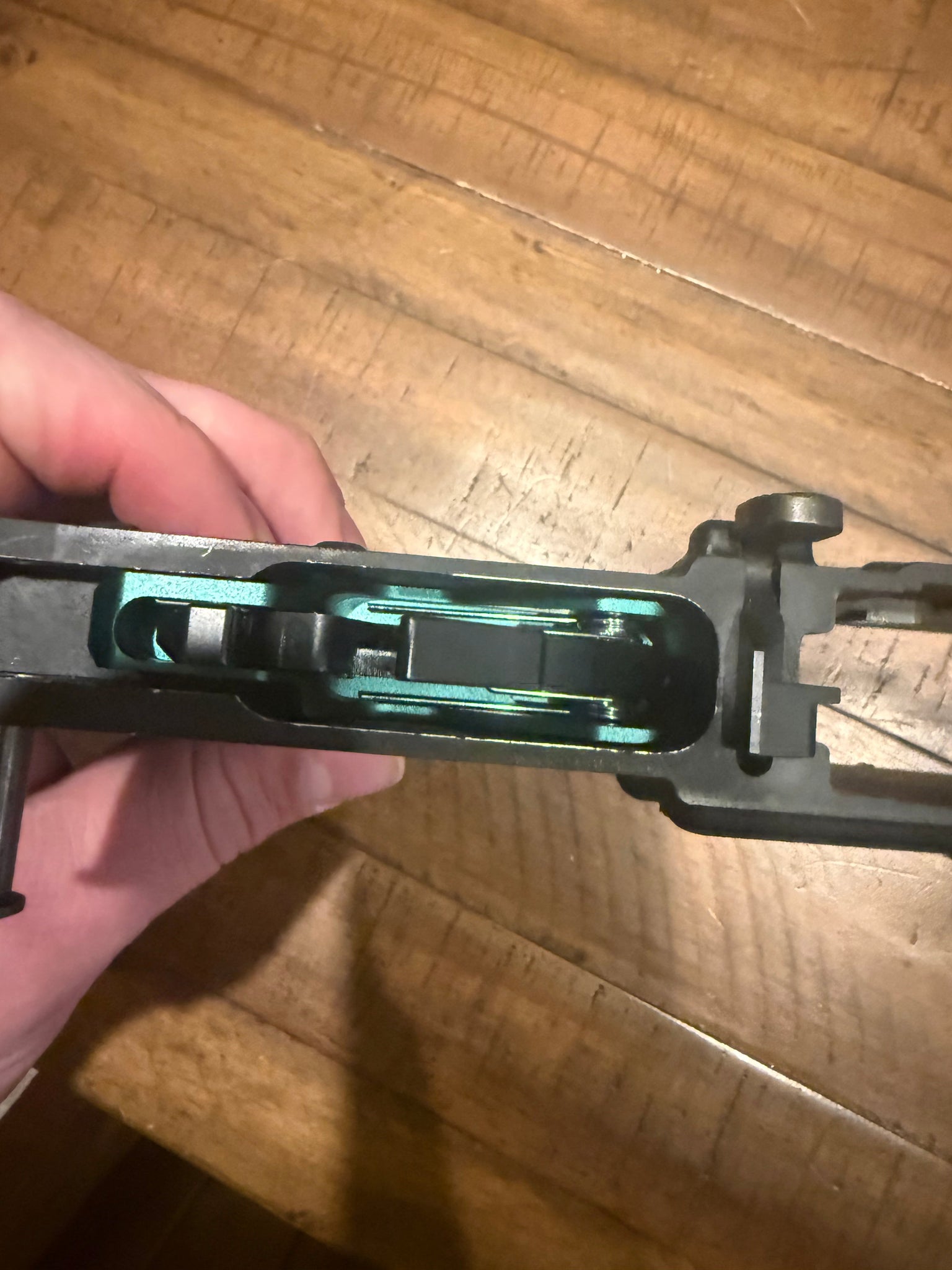
- Wider shoes reduce trigger-slap fatigue; narrower ones boost speed.
- Higher spring tension yields a forceful, immediate return; lower tension improves feel.
- Shorter reset distance allows faster follow-ups; longer frt-mr3 travels add a safety buffer.
Reliability Factors: Testing for Consistent Reset Under Different Ammunition
Testing a forced reset trigger across different ammunition is the only way to verify its reliable reset under varied pressure. Hot-loaded defensive rounds generate higher bolt carrier velocities than light target loads, which can slam the trigger mechanism past its catch point or cause slam-fires if the reset timing is too aggressive. Start with a full-power duty load, then transition to a soft-recoiling 55-grain FMJ; if the trigger fails to reset on the lighter round, the spring tension is too stiff. Conversely, a reset that works flawlessly with weak ammo but doubles with hot loads indicates the sear engagement is dangerously marginal. Finally, test steel-cased ammunition, as its harder primer and inconsistent pressure curve often expose reset failures that brass cases mask. A trigger that resets cleanly across all three categories is rarebreed frt worth your money; one that doesn’t is a parts-bin experiment.
What Should You Know Before Using a Forced Reset Trigger?

Before using a forced reset trigger, you must understand that it fundamentally changes your rifle’s firing cycle, requiring a firm, consistent grip to prevent the trigger from failing to reset. Unlike a binary or full-auto system, the forced reset trigger relies on recoil energy to slam the hammer back, so your shoulder must maintain solid contact with the stock. You’ll need to practice a deliberate, controlled trigger press; limp-wristing or shooting from unstable positions will cause hiccups. Also, know that your bolt carrier group and buffer weight must match the trigger’s spring tension—too light a setup leads to short strokes, while too heavy can batter the receiver. Finally, expect a sharper, more percussive feel than a standard trigger, and always wear ear and eye protection because the increased cyclic rate amplifies muzzle noise and gas blowback.
Proper Grip and Stance Techniques to Maximize Cycling Speed
A high, thumbs-forward grip is essential with a forced reset trigger, as it counters muzzle rise and keeps the receiver tracking flat for faster follow-up shots. Your support hand should apply firm lateral pressure against the handguard, not vertical torque, to maintain a stable platform during the reset phase. Position your lead foot slightly forward and lean your torso into the rifle, creating a braced triangle that absorbs recoil without shifting your point of aim. Tensing your grip just before the trigger resets—rather than during the pull—prevents involuntary micro-corrections that slow your cadence. Keep your elbows slightly bent and tucked, allowing your shoulders to act as shock absorbers, which maximizes cycling speed by reducing sight-picture disruption between shots.
Common Malfunctions and How to Diagnose a Short-Stroke or Drag Issue
Common malfunctions with a forced reset trigger often stem from a short-stroke or drag issue—where the bolt carrier fails to travel far enough rearward or encounters excessive friction. Diagnose by first cycling the action manually with the upper and lower separated; feel for gritty resistance or a premature stop. Next, inspect the trigger’s reset cam and sear engagement surfaces for burrs or carbon buildup. Then, fire a single round and observe the ejection pattern—weak ejection suggests insufficient carrier velocity. For a drag issue, check buffer weight and spring tension, then lubricate the carrier rails and cam track. A clear sequence: 1) verify carrier travel length, 2) measure reset cam clearance, 3) test with a lighter buffer, 4) re-check trigger return spring tension.
Maintenance Tips: Lubrication Points and Wear Patterns to Watch For
Before relying on a forced reset trigger, master its lubrication points and wear patterns to avoid malfunctions. Apply grease sparingly to the sear engagement surfaces, the reset cam track, and the bolt carrier raceway—these areas endure high-speed friction. Watch for peening on the hammer face or a polished, shiny spot on the trigger’s reset ledge, which signals galling. Check the disconnector hook for rounded edges, a primary indicator of imminent slip. Also monitor the buffer system’s impact area for flattening; uneven wear here means poor timing. Clean and re-lubricate every 300–500 rounds, as carbon buildup accelerates wear at the cam’s pivot pin. Replace springs at the first sign of set creep.
Frequently Asked Questions About Installation, Upgrades, and Safe Handling
Curious about forced reset trigger installation? Most owners ask whether drop-in units work with their existing lower—yes, if the receiver meets mil-spec dimensions, though some billet frames need minor fitting. Upgrades like heavier springs or adjustable sears are common, but always test function with snap caps first. Safe handling means never polishing contact surfaces yourself; that changes timing and invites slam-fires. Q: Can I upgrade my trigger without a fn p90 frt gunsmith? A: Only if you’re comfortable detail-stripping the lower, checking hammer follow, and verifying reset with dummy rounds—otherwise, pay a pro. Keep the trigger group dry, avoid over-lubrication, and torque screws to spec, not “feel.”


